Ferenzi in Firenze - Carlo Bonomi psicologo Firenze
Main menu:
Ferenzi in Firenze
FERENCZI
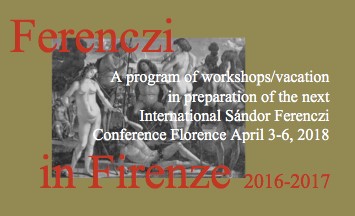
The program includes:
- a 16 hours workshop (Monday and Tuesday)
- an art tour of the city of Florence (Wednesday)
- a Florence food tour (Thursday)
- an art, wine, and food tour in Chianti (Friday)
- hotel accomodation (from Sunday to Saturday)
(the order can be changed)
Art tour in the city of Florence
The tours are conducted by a professional touristic guide, Francesco Gigliotti. Example of tour:
Florentine Last Suppers and Cloisters
An itinerary that takes you to the centre of the spiritual life in the Renaissance Florence: the unique tradition of the Last Suppers; the sacred stories represented on the walls of the cloisters, spaces of beauty and meditation; the masterpieces of the most important Italian artists between the 1400s and the 1500s - Beato Angelico, Paolo Uccello, Andrea Del Sarto, Ghirlandaio...
Duration: approx. 3:30 hours.
Bargello National Museum
The oldest public building in Florence, a fortress with its magnificent courtyard, the Loggia, the Salone del Consiglio; nowadays home to the most remarkable collection of Renaissance sculpture in Italy: Michelangelo, Donatello, Cellini, Verrocchio, Luca Della Robbia, Giambologna, and many other masters.
Duration: approx. 2:30 hours
Florence food tour
The tour is conducted by Karin Pantzer, MA in History and culture of food at Bologna University.
The food tour provides an overview of the history, origin and method of production of the different traditional Tuscan and Italian foods as well as how these foods are included in the daily Florentine diet. This is why the food tour also includes a visit and tasting at the local food market.
Furthermore I make suggestions and recommendations about local restaurants and shops where you can find high quality foods and only local customers. The main idea of the tour is to give an internal perspective of how food is viewed, lived and perceived by Florentines and how to avoid the tourist traps that unfortunately are so numerous!
The food tour consists of a tasting of typical pastries, different cheeses and cold cuts, a tasting at the bakery, then olive oil, balsamic vinegar, truffle, and different kinds of wine, chocolate and gelato. All the tastings take place in historical and little gourmet shops in the city center.
A tour lasts around 3-4 hours and it usually runs in the morning since the market is only open in the morning.
The tour can be adapted to the client preferences and specific needs.
Art, wine, and food tour in Chianti
It includes an art tour in Chianti and a wine and food tour at the Castello di Monsanto. To be further defined.
Ferenczi in Firenze is a program of workshop which will combine the pleasure of a vacation in Tuscany and the chance to study Sándor Ferenczi’s contributions to psychoanalysis. It has been organized in collaboration with the Ferenczi House in Budapest and will take place in anticipation and preparation for the International Sándor Ferenczi conference which will be held in Florence between May 3 and 6 of 2018.
The workshops/vacations will last 5-7 days and will unfold in small groups, each consisting of 10-15 clinicians or individuals interested in Ferenczi’s contributions to psychoanalysis. The workshop will take place in the same venue where the 2018 conference is scheduled to meet, the Convitto La Calza, an ancient 14th-century Hospital which has been transformed into a hotel and meeting center.
Workshops
The program of workshops is organized in collaboration with the Ferenczi House in Budapest and is directed by Carlo Bonomi, who will take part in each workshop as moderator.
A tentative list of workshop leaders and speakers who will participate include: Emanuel Berman, Franco Borgogno, Darlene Ehrenberg, Jay Frankel, Giselle Galdi, Adrienne Harris, Judith Meszaros, Clara Mucci, Arnold Rachman, and Jonathan Sklar.
The scheduled workshops are described hereafter.
Hotel accomodation
At Convitto La Calza, which is close to the Boboli Garden, Pitti Palace and the Ponte Vecchio. The price of the rooms is determined by the Convitto (it varies, according to the season, from about € 85-100 for a single room and € 100-140for a double room, inclusive of breakfast).
Information and registration
The participants in the program are kindly required to make a donation of € 50 to the Ferenczi House or to the Ferenczi network through a paypal button in the website www.sandorferenczi.org.
Price details.
- Registration fees: € 500, inclusive of the workshop and administrative expenses.
The following is part of the program, but is not included in the fees and has to be payed directly to the providers of the services:
- Hotel accommodation at the Convitto La Calza.
- Art tour in Florence: from 24 to 34 € entrance fees and earpieces included.
- Food tour in Florence: 90 €.
- Art, food, and wine tour in Chianti (since the transportation is the main cost, it can be calculated only when the number of participants is defined)
If you are interested in taking part in one or more of the scheduled workshops, chose the period and ask the secretary of the course, Giorgia Zandanel (e-mail giorgiazand@gmail.com), for a Registration form.
The workshops/vacations will be activated only if there are at least 10 registered participants.
Participants are asked to pay the registration fee only if this condition is fulfilled.
SCHEDULED WORSHOPS
4-10 September 2016
4-10 September 2016
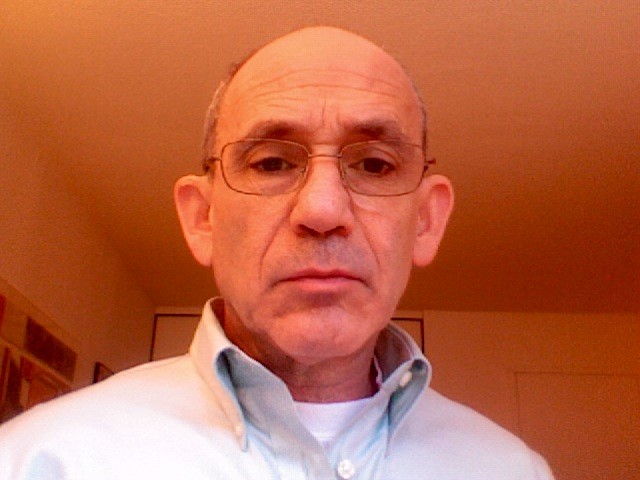
23-30 April 2017
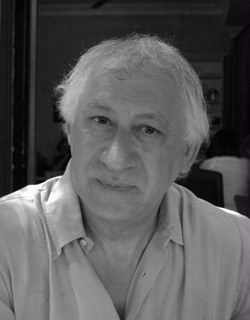
ARNOLD RACHMAN
The Resurrection Of Elizabeth Severn: Ferenczi's Analysand and Mutual Analytic Partner
Elizabeth Severn was called an "evil genius" by Freud. He felt she was leading Ferenczi away from traditional psychoanalysis. Consequently, she was condemned by the orthodox analytic community and removed from psychoanalysis as a meaning figure. The acquisition of The Elizabeth Severn Papers from the estate of her daughter, Margaret Severn and the discovery of a previously unknown interview of Severn by Kurt Eissler provide new, important date to re-evaluate Severn's functioning when she was in analysis with Ferenczi (1928-1933) and after the analysis (1933-1959). In a new book, entitled, Elizabeth Severn, The Evil Genius Of psychoanalysis published by Routledge Press, London, Severn emerges as not only as Ferenczi's mutual analytic partner in the study and treatment of trauma, but, an important figure in the history of psychoanalysis.
Arnold Wm. Rachman, PhD., FAGPA, is a Member-Board of Directors, The Sandor Ferenczi Center of the New School for Social Research, New York City; Honorary Member- The Sandor Ferenczi Society, Budapest Hungary; Donor- The Elizabeth Severn Papers, The Library of Congress, Washington, D.C.. Author- Sandor Ferenczi: The Psychotherapist of Tenderness and Passion (1997); Psychotherapy of Difficult Cases( 2003); Analysis of the Incest Trauma(2015); The Budapest School of Psychoanalysis(2016).
JAY FRANKEL
Ferenczi's concept of identification with the aggressor
Ferenczi's conception of identification with the aggressor (IWA)—at the heart of his trauma theory—starts with his revolutionary reconceptualization of the traumatic situation. Ferenczi included subtle assaults as traumatic. And he stressed the role of "hypocrisy"—when adults deny the abuse or blame the child—as leaving the child unbearably isolated, and as the most damaging element.
The IWA response involves finely tuned submission/compliance with the aggressor's demands, not just in outer behavior, but inwardly, on a mental level of thought, perception, and feeling, and morally, in terms of readily blaming oneself and losing a sense of goodness and wholeness. Compliance is both a survival tactic in reality, and a way for the child to continue to feel a sense of belonging in the family. The inner accommodations of IWA help insure that the child plays her role effectively. Indeed, IWA is closely intercoordinated with dissociation and introjection.
IWA often turns into a persisting tendency to accommodate and to blame oneself. And the internal distortions it engenders undermine the child's capacity to think independently and to psychologically separate, and lead her to lose a feeling of goodness and wholeness, a sense of inner authenticity, and a sense of agency. These losses are compensated in some people by an overinflated narcissistic response, which may, ironically, facilitate submission.
Consistent with a broader understanding of the traumatic situation, IWA seems to be a widespread tendency under certain circumstances—not limited to people who have been grossly abused. This observation opens up new perspectives on a great many patients who have not been grossly traumatized, and also makes IWA a valuable tool for understanding large-scale social phenomena involving submission and compliance. As Ferenczi first observed (and experienced), IWA also often plays a central role in structuring the analytic relationship, for both patient and therapist, and is key in understanding and working through clinical impasses. Ultimately, IWA provides the basis for a new, more mutual conception of the analytic relationship.
Jay Frankel, Ph.D., is an Associate Editor of Psychoanalytic Dialogues; Adjunct Clinical Associate Professor, and Clinical Consultant, in the New York University Postdoctoral Program in Psychotherapy and Psychoanalysis; and Faculty at the Institute for Psychoanalytic Training and Research, and the Trauma Treatment Training Program at the Manhattan Institute for Psychoanalysis, both in New York. He is a co-editor of an upcoming Karnac book on Ferenczi, co-author of Relational Child Psychotherapy (2002, Other Press), and author of dozens of journal articles and book chapters about trauma, identification, the therapeutic relationship, trauma, play, the work of Sándor Ferenczi, and psychoanalysis and politics.
Jonathan Sklar
First day: Ferenczi and Contemporary Psychoanalysis
Second day: An Examination of Balint’s Groups in the setting of General Practice, Psychiatry and Medicine
Listening to the doctor’s impossible patient through the perspective of the doctor’s problem brings the value of the countertransference to bear in understanding the clinical encounter.The Hungarian tradition from Ferenczi to its present day applications that Balint brought to London will be discussed with many clinical examples as a way of embedding psychoanalysis in medicine and the body.
Jonathan Sklar is a training analyst and Fellow of the British Psychoanalytic Society, in full time analytic practice in London.
He teaches and supervises annually at the Institute of Psychoanalysis and runs a course on ‘Ferenczi and Contemporary Psychoanalysis’. He teaches termly in Chicago, has convenes a psychoanalytic conference in Cape Town for the last decade and taught extensively in Eastern Europe.
From 2007-2011 he was Vice President of the European Psychoanalytic Federation and is currently on the IPA board.
Landscapes of the Dark-history, trauma, psychoanalysis, was published by Karnac 2011.
Karnac will publish his latest book ‘Balint Matters-Psychoanalytic dynamics for the art of assessment’ in late 2016
Date:
Date:
ADRIENNE HARRIS
Trauma, regression, and mutuality
A workshop on the Ferenczian notions of trauma, regression, and mutuality as they appear in contemporary relational theory and practice. The workshop will also focus on Ferenczi’s ideas about development and early disturbance. These themes will be traced through the object relations work of Winnicott and Balint , relational considerations of the entanglement of transference and countertransference, and relational and intersubjective work on primitive states.
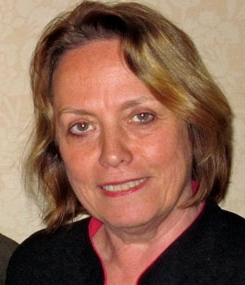
Adrienne Harris, Ph.D. is Faculty and Supervisor at New York University Postdoctoral Program in Psychotherapy and Psychoanalysis. She is on the faculty and is a supervisor at the Psychoanalytic Institute of Northern California. In 2009, She, Lewis Aron, and Jeremy Safron established the Sandor Ferenczi Center at the New School University. With Lewis Aron she edits the Relational Book Series which has published over 60 volumes.
She published Rocking the Ship of State: Women and Peace Politics in 1985; Gender as Soft Assembly in 2005, She edited, with Muriel Dimen Storms in her Head ( on women and hysteria), with Lewis Aron, The Legacy of Sandor Ferenczi, with Steven Botticelli First Do No Harm: Psychoanalysis, Warmaking and Resistance, 2010, and in 2015 with Steven Kuchuck, The Legacy of Sandor Ferenczi: From Ghost to Ancestor.
She writes about gender and development, about analytic subjectivity, about ghosts, and about the analysts developing and writing around the period of the First World War.
FRANCO BORGOGNO
The Clinical Language of Sándor Ferenczi
Sándor Ferenczi gave to psychoanalysis an extraordinary number of contributions in various areas. These are the areas I have in mind: “the improper and not adequate coupling, the praecox ejaculation and the interpretation”; “the suggestion, the suggestibility and the pragmatic of communication”; “the introjection and its processes”; “the effect of the analyst’s communications and non-communications on the patient”; “the resistance, the negative therapeutic reaction and the narcissistic countertransference”; “the birth and the evolution of the Ego”; “the children, the Infantile and the primitive anxieties and defenses”; “the contributions to the classic psychoanalytic technique”; “the phases of the experimentation on the technique”; “the adaptation of the family to the child”; “the elasticity of the technique and the tact”; “the different meanings of the dreams and their interpretation”; “the confusion of tongues between the adults and the child”; “the psychic qualities of the good-enough analyst”; “the sins of psychoanalysis and psychoanalysts”; “the traumatogenesis, the many faces of trauma and the curability of the complex post-traumatic consequences”; “the language of the body and the somatic memories”; “the ‘Masculine’ and the ‘Feminine’”; “narcissism-socialism/egoism-altruism/autarchy-universalism”…
Franco Borgogno, PhD in Philosophy and Psychology; Training and Supervising analyst of the Italian Psychoanalytical Society (SPI) and Full Member of the American Psychoanalytic Association; former Scientific Secretary and President of the Turin Centre of Psychoanalysis and Secretary of the Training Institute of Milan; Full Professor of Clinical Psychology and founder of the Doctoral School in Clinical and Interpersonal Relationships Psychology and of the School of Specialization in Clinical Psychology at the University of Turin; recipient of the Mary Sigourney Award in 2010; International Psychoanalytical Association (IPA) Chair of the Psychoanalysis and University Committee; one of the founders of the International Sándor Ferenczi Foundation and at present President of the Associazione Italiana Sándor Ferenczi.
Author of numerous psychoanalytical papers in books and reviews; and of the following books: L’illusione di osservare [The Illusion of Observing] (Giappichelli, 1978), Psicoanalisi come percorso (Bollati Boringhieri, 1999) [Psychoanalysis as a Journey (Open Gate Press, 2007)], La partecipazione affettiva dell’analista [The Affective Participation of the Analyst] (FrancoAngeli, 1999), Ferenczi oggi [Ferenczi Today] (Bollati Boringhieri, 2004), The Vancouver Interview (Borla, 2007), La signorina che faceva hara-kiri e altri scritti (Bollati Boringhieri, 2010) [The Young Girl who Committed Hara-Kiri and Other Clinical and Historical Essays (Karnac, 2013)]; Re-reading Ferenczi Today. Italian Contributions (Borla, 2016). Editor, with P. Bion Talamo and S. A. Merciai, of Bion’s Legacy to Groups and Institutions (Karnac, 1998), and Lavorare con Bion (Borla, 1998) [W. R. Bion: Between Past and Future (Karnac, 1999)]; with C. Bonomi, of La catastrofe e i suoi simboli [The Catastrophe and its Symbols] (Utet, 2001); with A. Luchetti and L. Marino Coe, of Reading Italian Psychoanalysis (Routledge/New Library of Psychoanalysis, 2016).
Date:
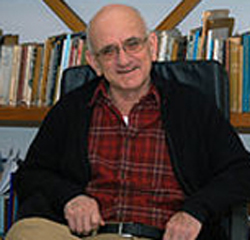
EMANUEL BERMAN
A generative dyad: The interaction of the personal and the theoretical in the Freud-Ferenczi relationshipThis workshop will explore the Freud-Ferenczi relationship from 1908, when the two met, till 1933, when Ferenczi died. Its main themes will be the fertile mutual influence between the two, and the close interaction between the personal level of the relationship (Freud as Ferenczi's friend, colleague, teacher, analyst) and its theoretical level, which helped both to develop their models.
Emanuel Berman, Ph.D., is a training and supervising analyst at the Israel Psychoanalytic Society; Chief International Editor of Psychoanalytic Dialogues; and Professor Emeritus of Psychology at the University of Haifa. He edited Hebrew translations of Freud, Ferenczi, Balint, Winnicott, Ogden, Britton and others.